


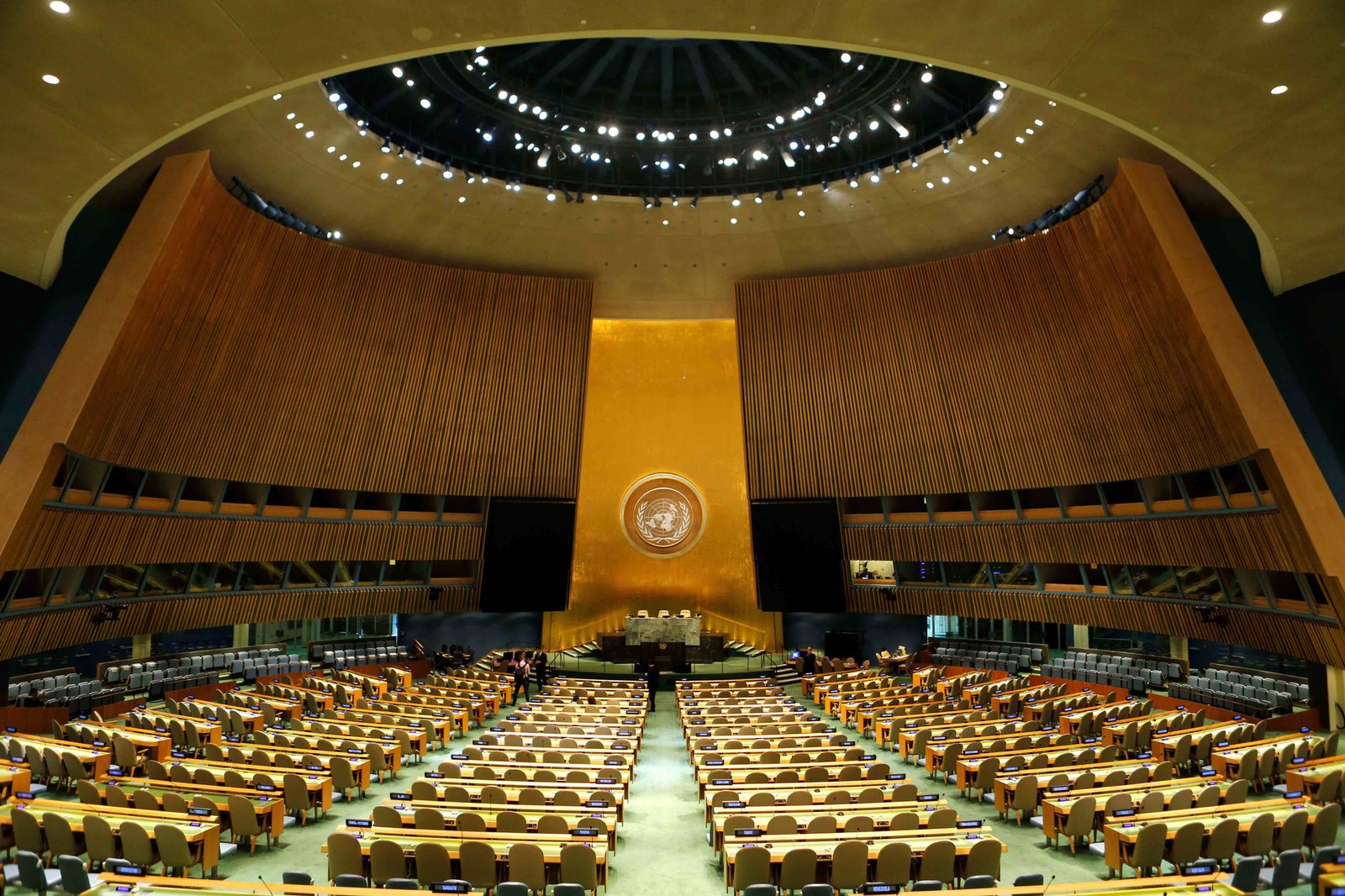
For much of the post–Cold War era, international politics was framed as a story of transition.
A movement away from power politics, away from rivalry, away from existential conflict — and toward rules, institutions, and convergence.
The future, we were told, would be different.
It was not.
What failed was not prediction, but assumption. The belief that history had bent in a single direction — toward stability, cooperation, and managed competition — collapsed under the weight of events that never truly disappeared.
Power did not vanish.
Conflict did not dissolve.
Strategy did not become obsolete.
They adapted.
The Illusion of Arrival
The dominant mistake of recent decades was the idea of arrival — the notion that international politics had reached a stable endpoint. That great-power rivalry had been replaced by governance. That economic integration had neutralized strategic competition. That deterrence, institutions, and interdependence had rendered war irrational.
This belief produced comfort, not clarity.
Stability was mistaken for resolution.
Restraint was read as trust.
The absence of war was treated as evidence of peace.
But non-events are not proof. They are conditions — temporary, contingent, reversible.
The future did not fail to arrive because it was delayed.
It failed because it was never guaranteed.
Power Never Left — It Changed Shape
Power politics did not end; it became less visible and more complex.
Instead of overt confrontation, competition moved into gray zones:
economic coercion, technological rivalry, legal warfare, information campaigns, and crisis manipulation.
Military force did not disappear; it became embedded in deterrence, signaling, and escalation management. Violence was postponed, not eliminated.
States continued to calculate advantage, vulnerability, and risk — just under new constraints and narratives.
What changed was not the logic of power, but the language used to deny it.
Strategy Without Illusion
The failure of the promised future has consequences. Strategic complacency is one of them.
When restraint is confused with stability, escalation becomes surprising rather than predictable. When institutions are treated as referees rather than arenas, their limits are misunderstood. When deterrence is assumed to produce peace rather than delay conflict, crises become more dangerous, not less.
Effective strategy begins with clarity — not optimism.
It requires recognizing that:
-
stability can coexist with rivalry,
-
cooperation can coexist with coercion,
-
and peace is not the default outcome of interdependence.
The world did not regress.
It revealed itself.
Why This Matters
The most dangerous moments in international politics rarely announce themselves as turning points. They emerge from accumulated misreadings, deferred tensions, and misplaced confidence.
Understanding why the future failed to arrive is not an exercise in pessimism. It is a rejection of illusion.
Strategy does not require despair — but it does require honesty.
And honesty begins with abandoning the idea that history had already done the hard work for us.
Takeaway
The future did not fail because it was stolen or sabotaged.
It failed because it was assumed.
Power endured. Conflict adapted. Strategy remained necessary.
Only the illusions changed.
