


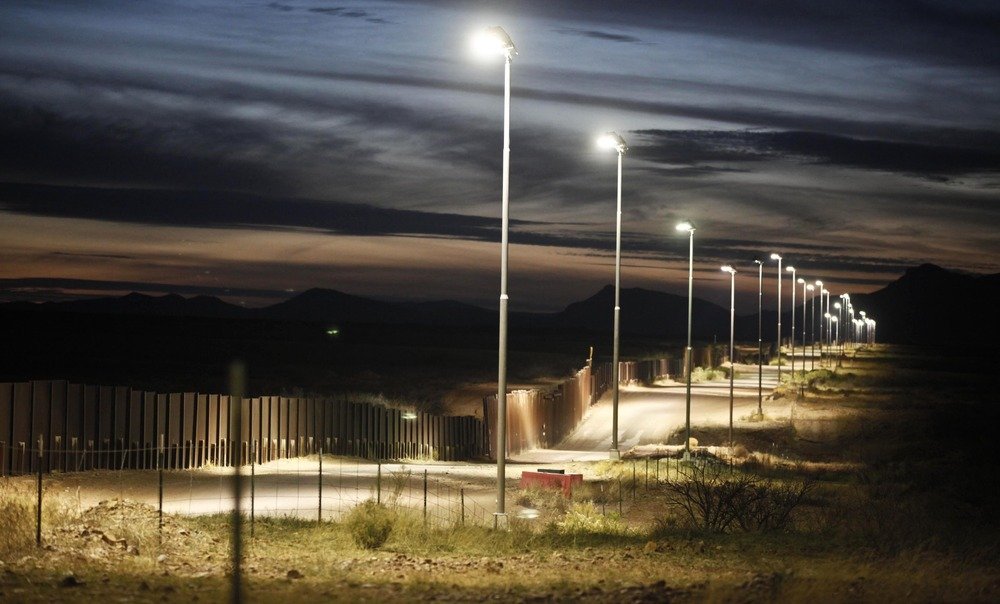
Why defensive actions often generate unintended conflict
The security dilemma is one of the most enduring — and most misunderstood — dynamics in international politics. It explains how states seeking only to defend themselves can nevertheless provoke fear, arms races, and conflict.
At its core, the security dilemma is not about aggression. It is about uncertainty.
What the Security Dilemma Is
A security dilemma arises when actions taken by one state to increase its own security reduce the security of others. These actions are often defensive in intent: military modernization, alliance formation, force deployment, or technological development.
Yet because intentions are opaque and capabilities are visible, defensive measures are frequently interpreted as offensive threats.
The result is a paradox: efforts to feel safer can make everyone less secure.
Why Defensive Actions Look Threatening
In international politics, states cannot directly observe one another’s intentions. They infer them from behavior — and behavior is filtered through suspicion.
A new missile system may be designed for deterrence, but it can also be used for attack. A troop deployment framed as reassurance may appear as preparation. Even transparency can backfire if it reveals capabilities that others feel compelled to match.
The problem is not deception. It is ambiguity.
Because intentions can change quickly while capabilities endure, states focus on what others can do rather than what they say they intend.
The Role of Uncertainty and Misperception
The security dilemma is intensified by uncertainty and misperception. Signals are sent, but they are rarely received as intended. Historical experience, strategic culture, and domestic politics all shape how actions are interpreted.
Fear does not require hostility. It requires doubt.
Once doubt takes hold, even modest measures can trigger disproportionate responses. What begins as precaution can evolve into escalation through a series of reactive steps, none of which were planned as aggressive.
Arms Buildups Without Aggression
One of the most visible outcomes of the security dilemma is arms accumulation without explicit intent to fight.
States build because others build. Capabilities expand not to achieve dominance, but to avoid vulnerability. Over time, this dynamic produces spirals of competition driven less by ambition than by anxiety.
Importantly, both sides may view themselves as restrained. Each escalation is justified as necessary, defensive, and reluctant.
Conflict, in this sense, emerges without a clear aggressor.
Why the Dilemma Is Hard to Escape
The security dilemma is difficult to resolve because it is rooted in structure rather than policy choice. As long as the international system lacks a central authority and states remain responsible for their own survival, uncertainty persists.
Trust-building measures can mitigate the dilemma, but they rarely eliminate it. Verification is imperfect. Commitments are reversible. Shifts in power alter incentives.
Even cooperation can coexist with competition, as reassurance in one domain fails to offset fear in another.
Why the Security Dilemma Matters for Policy
Misunderstanding the security dilemma leads to strategic error. States may interpret defensive reactions as proof of hostile intent, reinforcing worst-case assumptions. Policies designed to signal resolve may instead accelerate arms races.
Recognizing the security dilemma does not require abandoning defense. It requires calibrating actions with an awareness of how they will be perceived, not just how they are intended.
Effective strategy begins with acknowledging that insecurity can be mutual — and unintentional.
Takeaway
The security dilemma shows how conflict can emerge without aggression. Fear, not hostility, drives escalation. Ignoring this dynamic turns precaution into provocation.
